The One
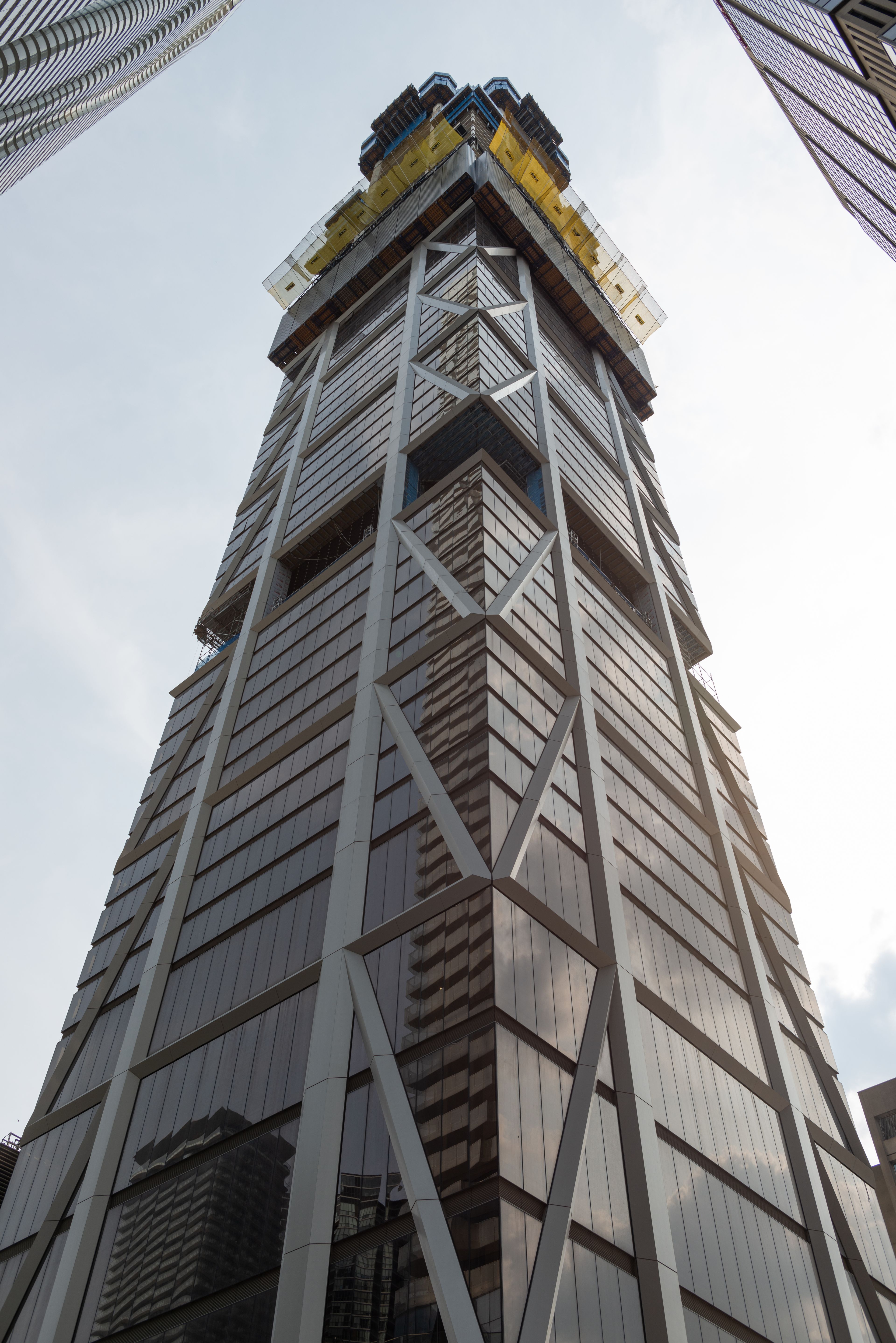
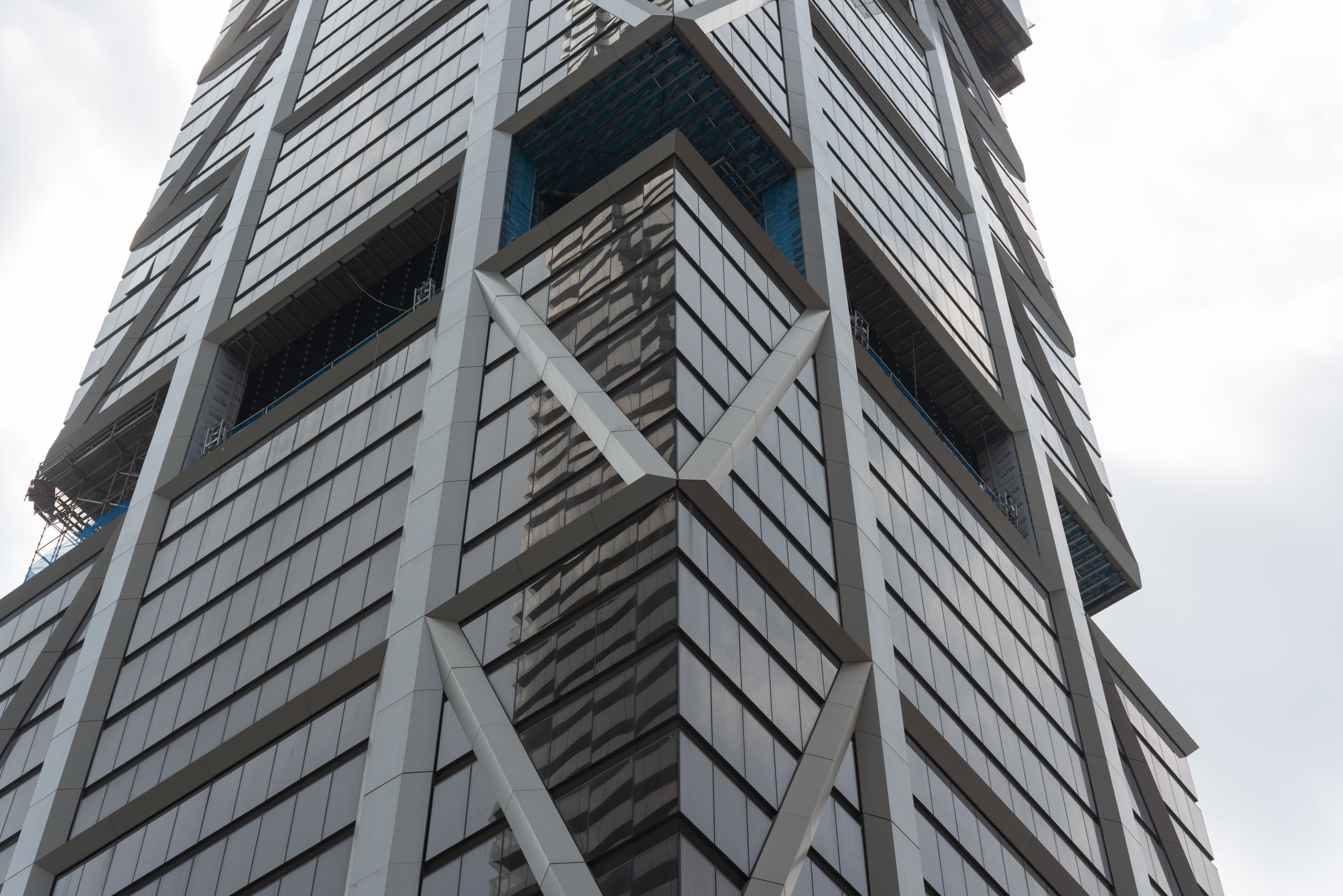
On its way to becoming Canada’s tallest skyscraper, The One’s height and singular, bronze-toned exoskeleton earns it a prominent place on the Toronto Skyline. Rising 1,012 feet (309 meters), this mixed-use supertall will surpass the city’s next-tallest structure by 34 feet (10.5 meters). Once complete, it will host 476 luxury residences, retail space, and a five-star hotel. The design of this adaptive reuse projects retains at the building’s base the 1883 brickwork facades of the historic William Luke Buildings, incorporating the interiors into the retail spaces.
| Client | Tridel |
|---|---|
| Architects: | Foster + Partners and Core Architects |
| Size | 85 Stories | 1,012 Feet (309 M) tall | 1,580,000 SF (146,787 SM) | 476 Units |
| Sustainability | Targeting LEED Silver |
| Office: | Overland Park |
| Completion: | Est. 2028 |
The reinforced concrete structure’s diagonal steel bracing exoskeleton works with the building’s core to resist sway, providing stiffness while adding a bold architectural design element. The exoskeleton carries loads to the perimeter, creating vast, open retail spaces with unobstructed floor pates and flexible residential layouts thanks to reduction of structural walls and columns.
Our detailers and engineers lent their expertise to the connection design of the structural steel elements for The One, specifying cast steel connectors to tie together the exoskeleton’s steel beams, simplifying steel fabrication and enhancing aesthetics, with less bulky welded connections than typical. The rounded shape of the connectors also allows forces to flow through the metal more smoothly. These specialized steel nodes collect the structural framing and transfer loads from the concrete core to perimeter mega-columns, enabling column-free retail spaces. The connection nodes were designed to extremely tight tolerances (within a few millimeters), despite some components weighing between 30 and 60 metric tons.