)
Wasl Tower
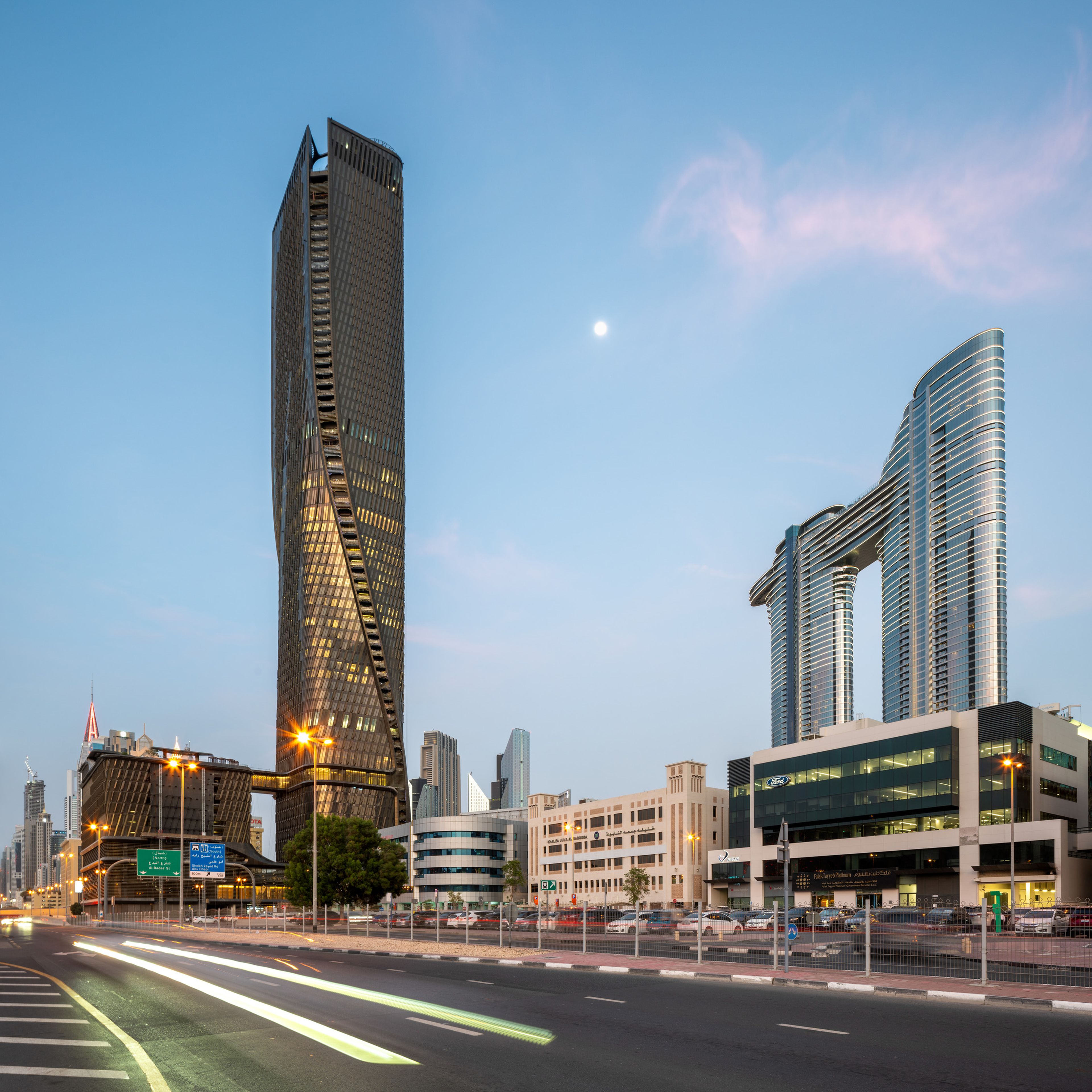
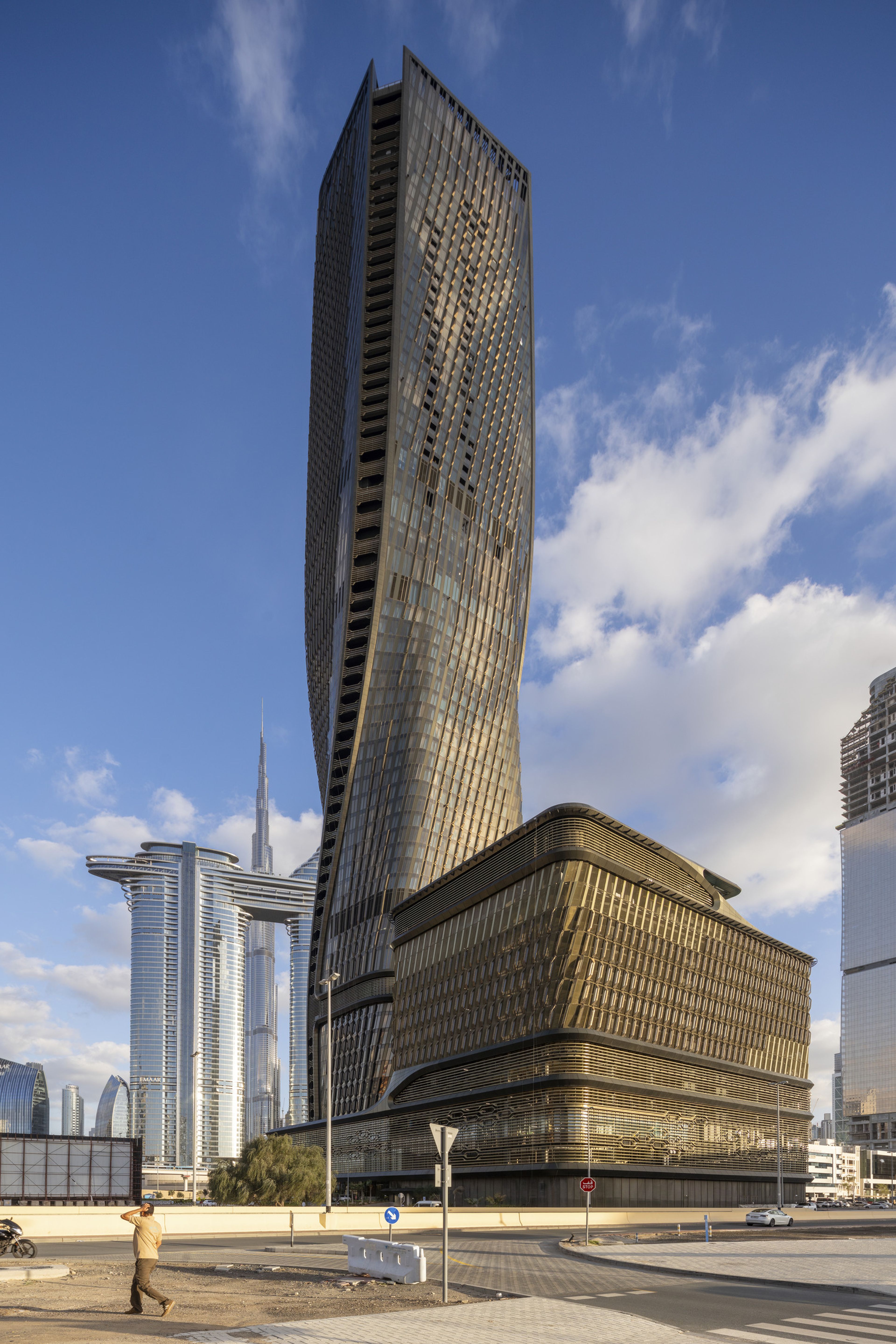
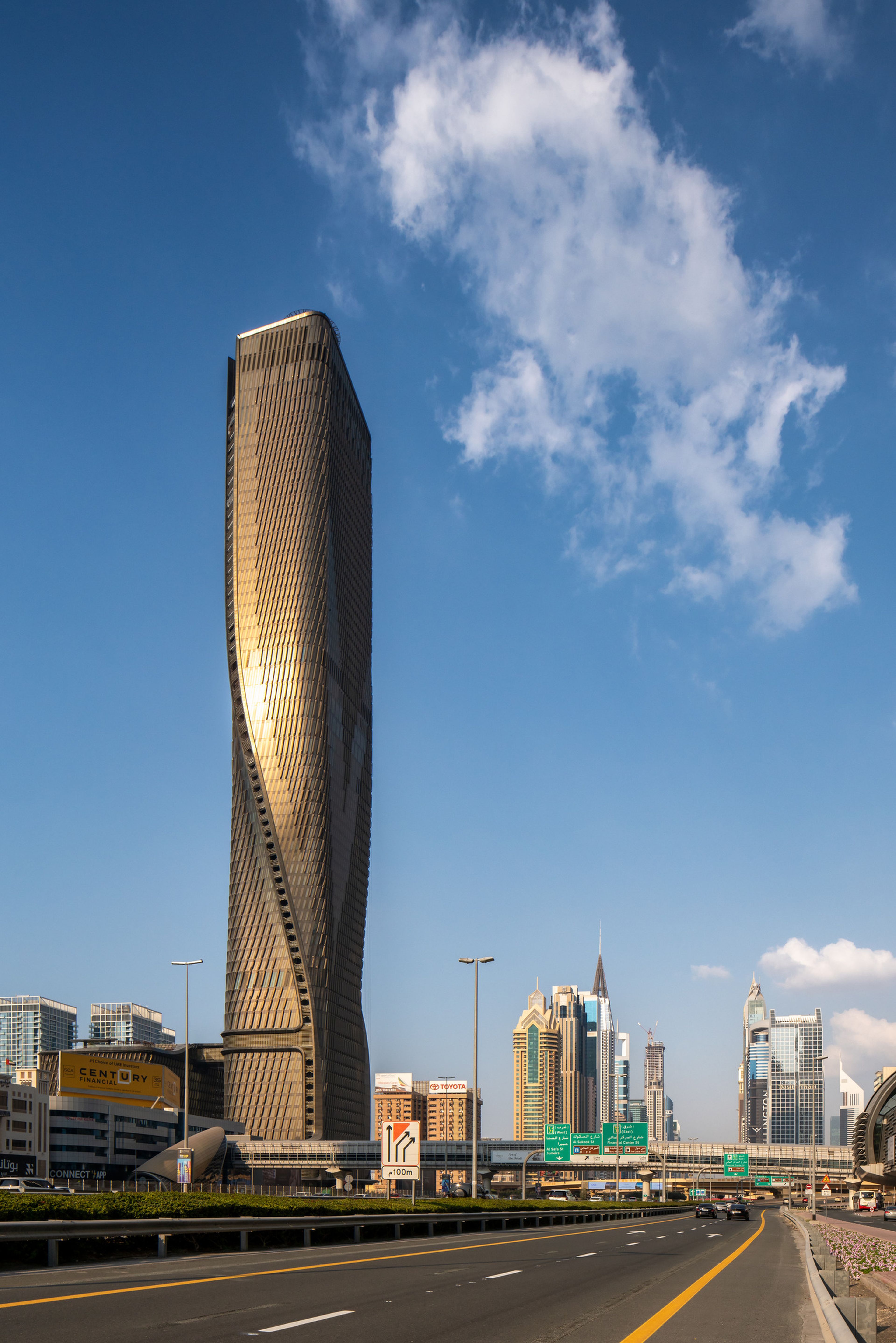
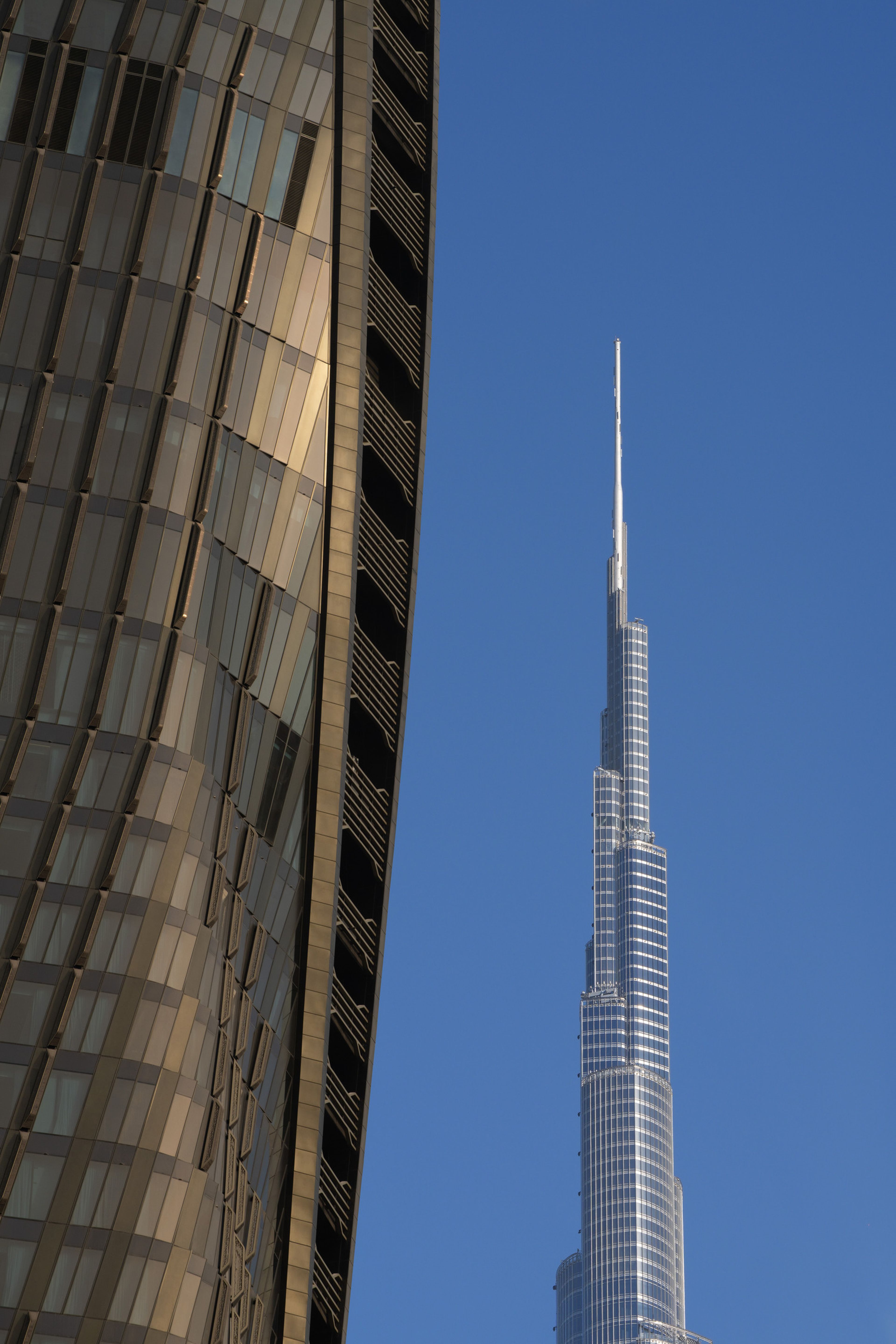
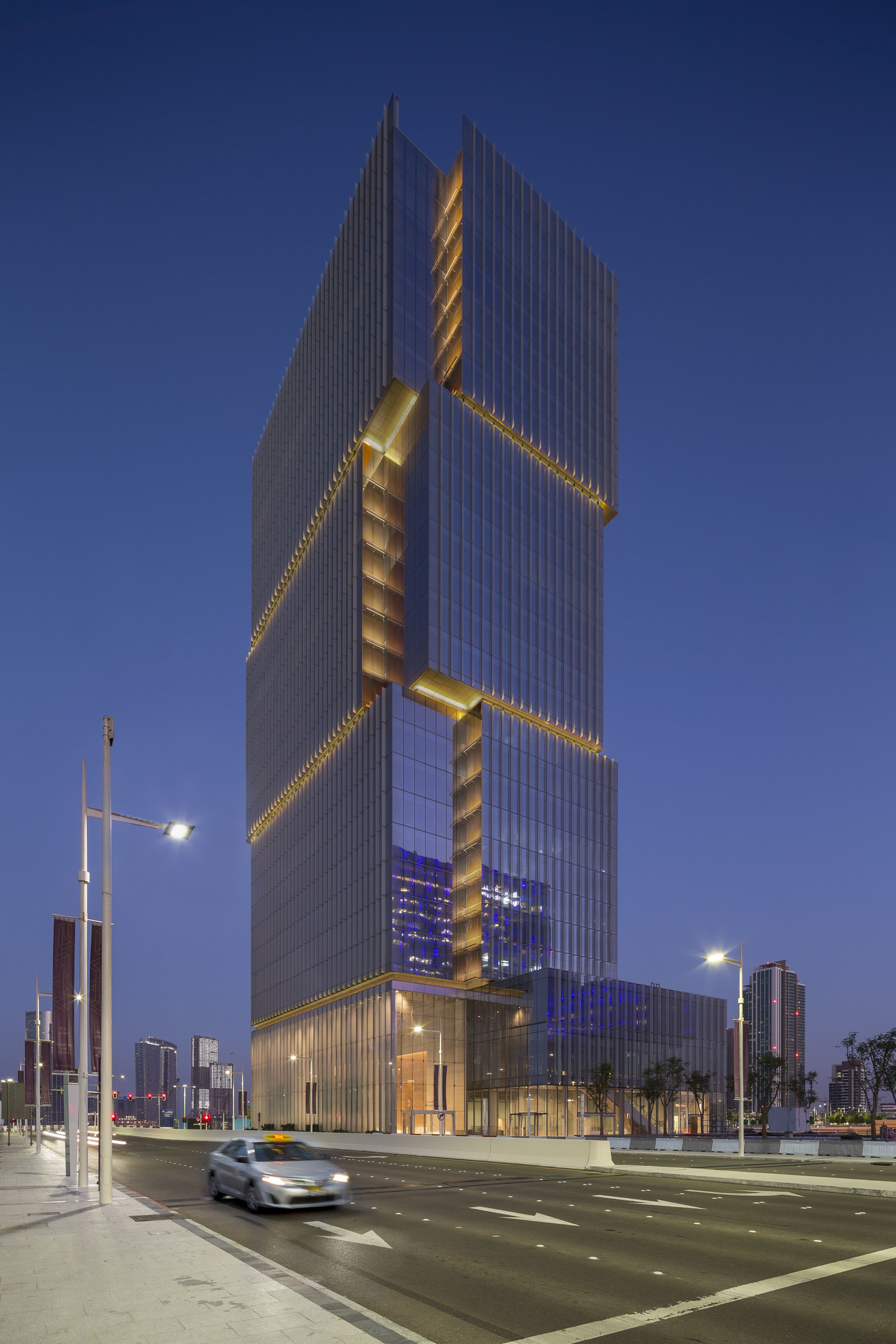
The ultra-luxury, mixed-use, 1.86M SF Wasl Tower rises 1,000 feet on an 85,000 SF plot in the heart of Dubai, offering spectacular views to Burj Khalifa, the Arabian Gulf, and Sheikh Zayed Road. The diverse program across 64 stories includes offices, a 5-star, 259-key Mandarin Oriental hotel, 229 residences, and such amenities as sports facilities, spa, retail, rooftop pools, and restaurants. An adjacent 11-level parking structure houses ballrooms and a rooftop infinity pool, connecting to the tower at two levels by three, 75-foot-long pedestrian bridges.
| Client | Wasl Asset Management Group and Arabtec Construction LLC |
|---|---|
| Architects: | UN Studio and U+A |
| Size | 64 Stories | 1,822,545 SF (169,320 SM) | 258 Keys | 229 Units |
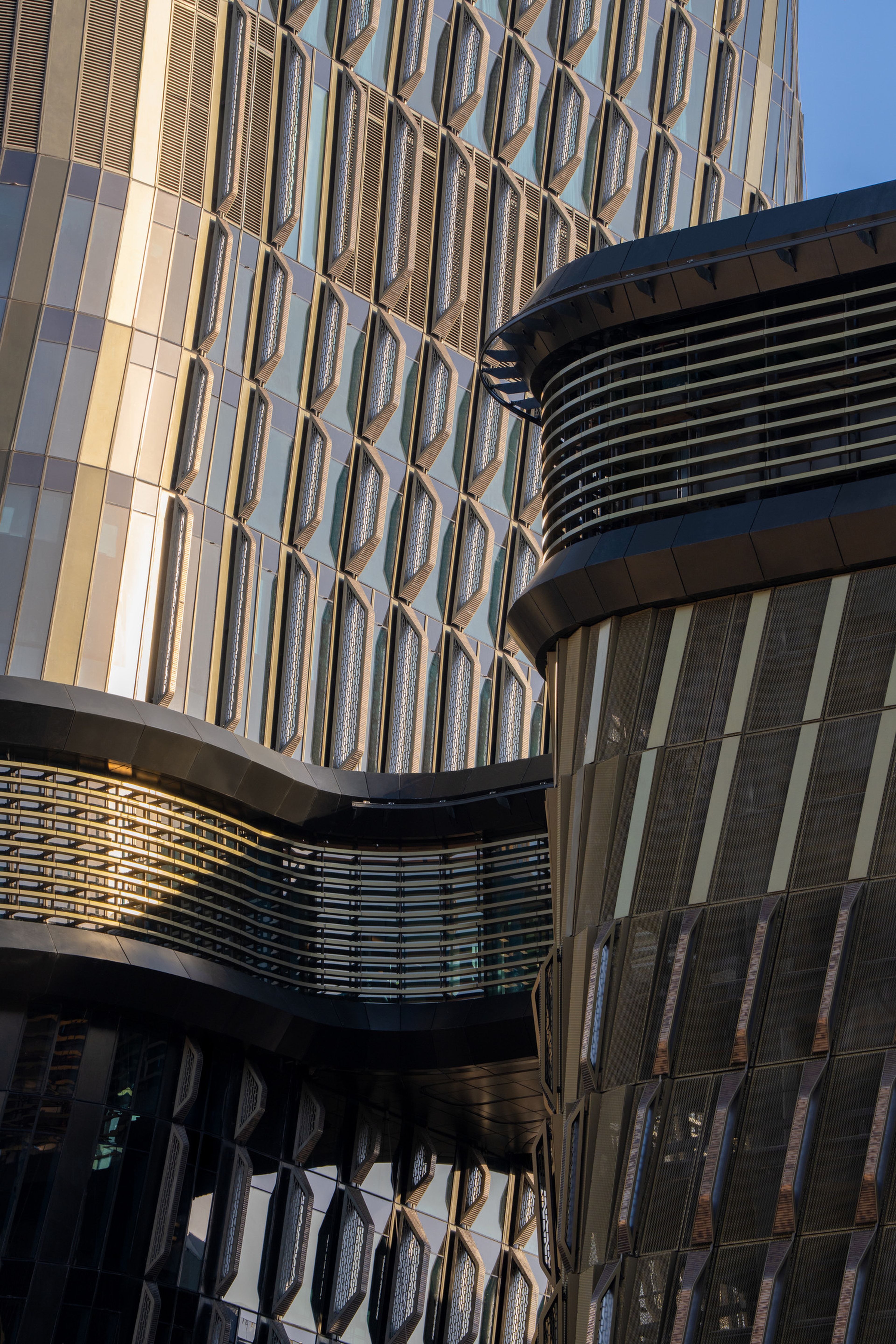
| Sustainability | Passive façade design (world’s tallest ceramic), slender structural components, water recycling system |
| Office: | London |
| Completion: | 2025 |
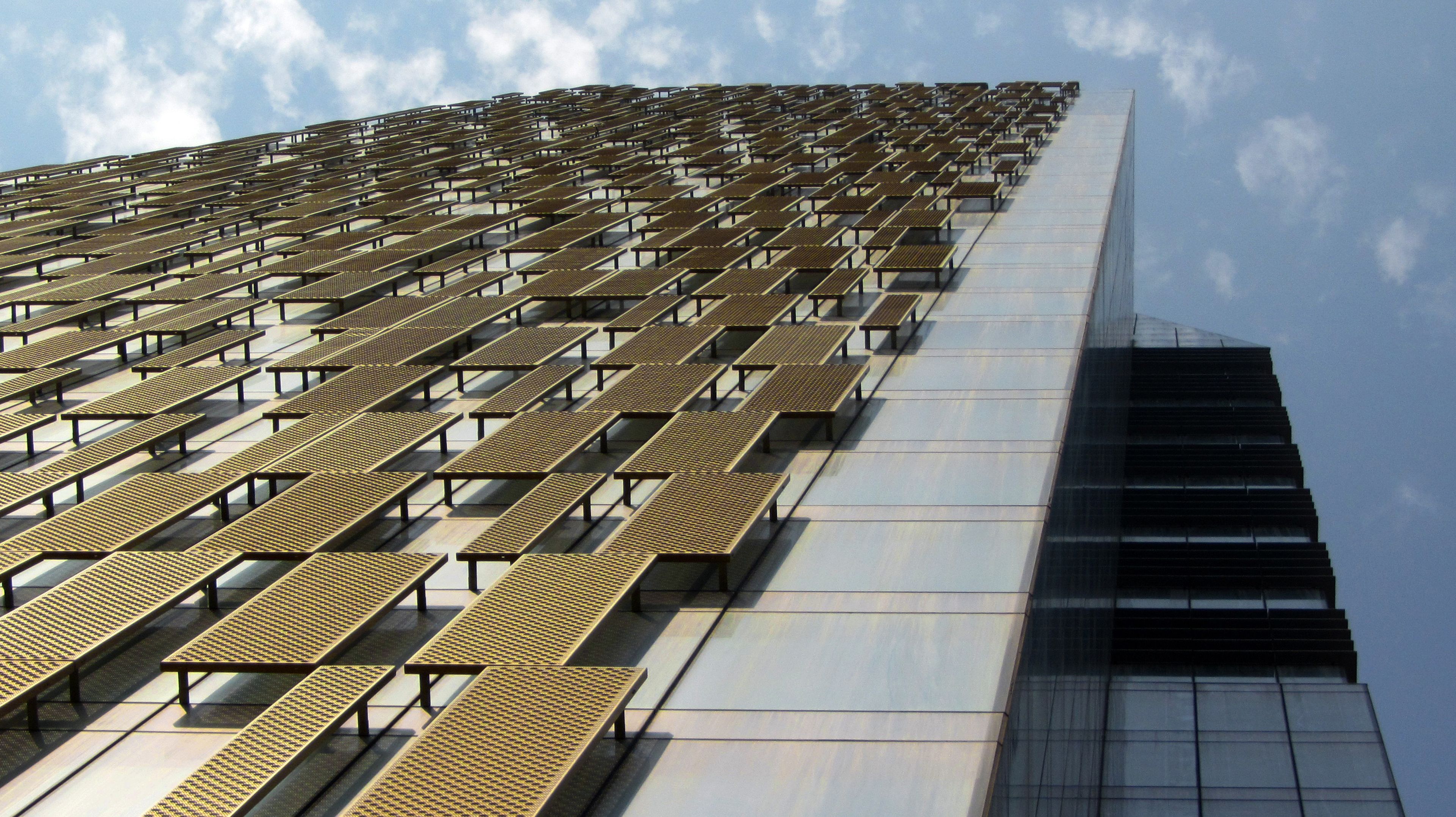
Highly sustainable, Wasl Tower boasts the world’s tallest ceramic façade. Its distinctive, “contrapposto” twisting, asymmetrical form, which reduces wind loads by 20%, and exceptional slenderness ratio presented complex engineering challenges.
Beginning with Werner Sobek’s original structural design for the tower, we worked with the contractor (Arabtec Construction LLC) and AOR/EOR (U+A) to complete a critical value engineering and design review, followed by the development of a new, innovative, material-efficient, and highly buildable structural design—that saved millions of dollars and transformed the construction approach.
The final structural solution features a strong, central, reinforced concrete core (with high-performance concrete) with shear walls that distribute loads across floorplates that twist along the tower’s Z-axis. This approach eliminated the use of massive obstructive columns and excessive wall thicknesses, optimizing floor area and broad, open spaces. Strategically placed composite outriggers on four levels connect the core to the perimeter to address complex shear forces and torsional loads with necessary stiffness. Support for the tower’s dynamic, sinuous form was achieved through sloping columns and the gradual elongation of cantilevers strategically placed at the corners of post-tensioned slabs.
Sustainable design features include a series of vertical gardens—stacked outdoor balconies that form a green ribbon along the tower’s silhouette—designed to reduce carbon dioxide levels in the building.