One Times Square Wins SEAoNY SEE Award Adaptive Reuse Category
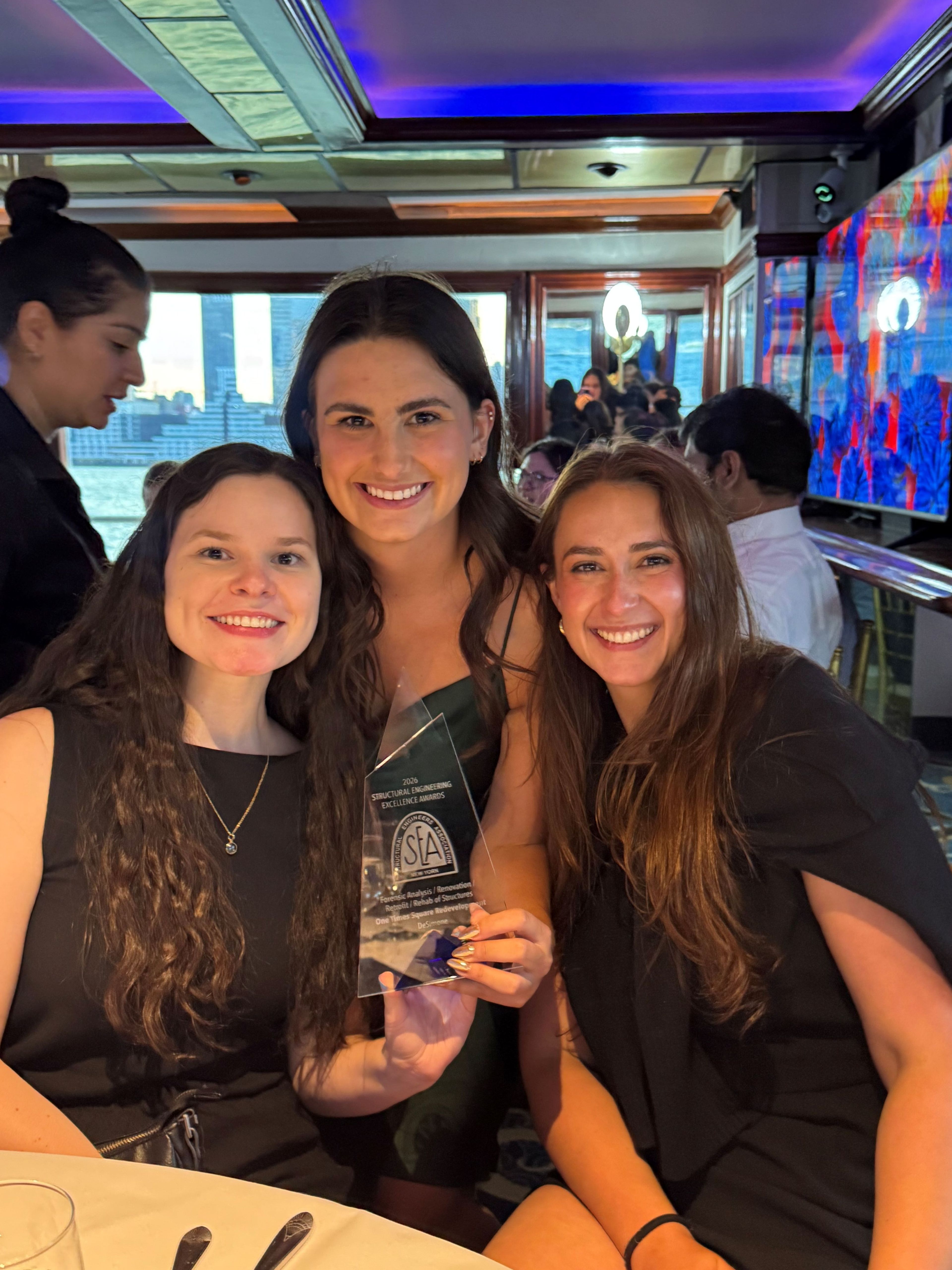
The redevelopment and adaptive reuse of One Times Square has won a SEAoNY Structural Engineering Excellence Award in the Adaptive Reuse / Forensic Analysis / Renovation / Retrofit / Rehabilitation of Structures category!
Through an ambitious adaptive reuse and modernization effort, the historic 1904 steel-framed structure—the iconic site of the New Year's Eve Ball Drop—was transformed from a largely vacant and underutilized building into a vibrant, year-round destination.
The redevelopment unlocks the landmark’s full potential, reimagining it as a dynamic, mixed-use venue that reconnects the public with one of New York City’s most recognizable landmarks while creating new opportunities for entertainment, culture, and engagement.
Built on a tightly constrained, trapezoidal, 5,400-SF footprint directly above and adjacent to the active, highly trafficked Times Square MTA subway complex, the building had to be extensively modified to accommodate significantly higher public occupancy loads. Realizing this vision required far more than a conventional renovation.
As structural engineers for the project, we played a significant role in the building’s transformation and adaptive reuse, beginning with a comprehensive reassessment of its load paths and capacity to evaluate global stability and localized overstress conditions.
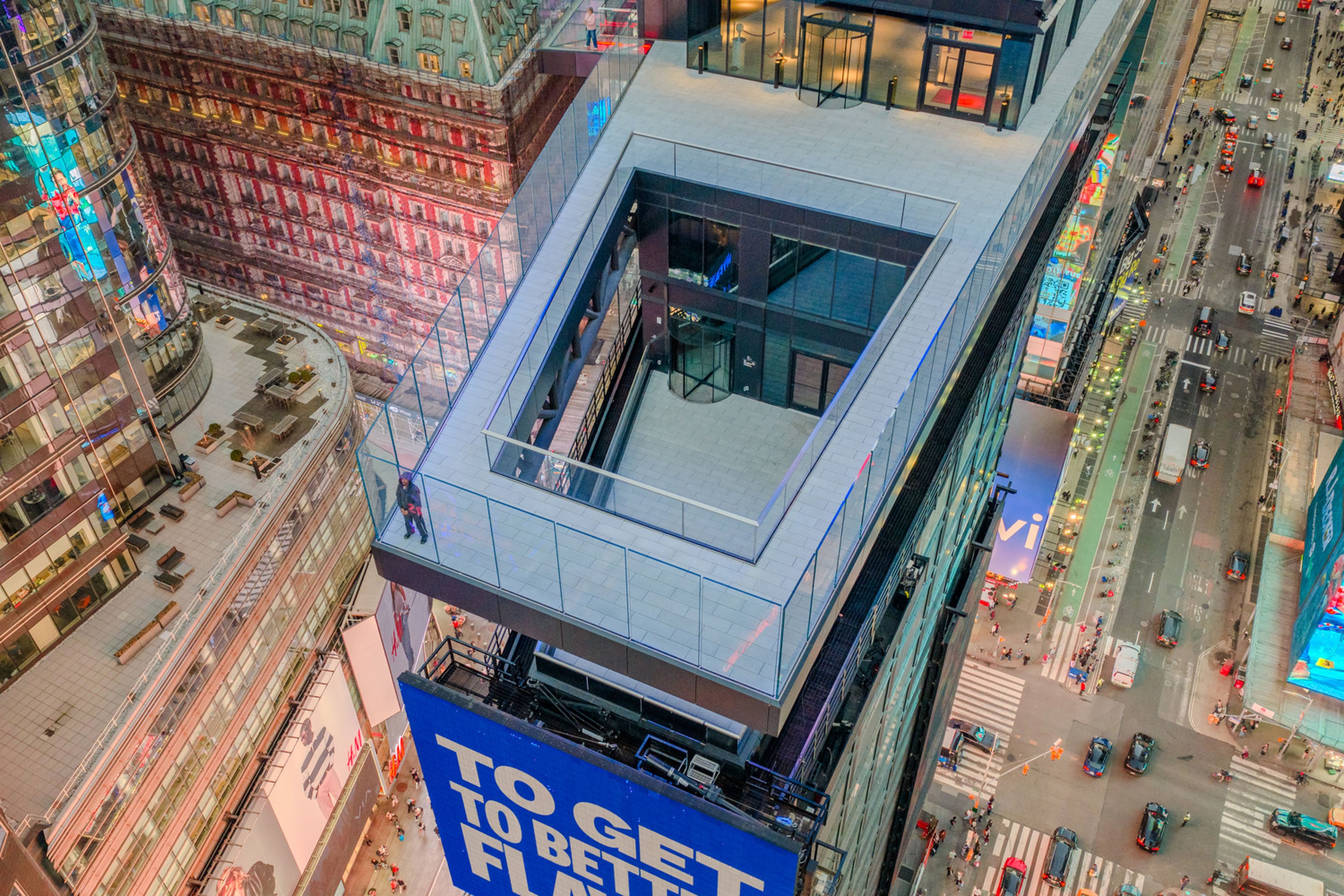
To support the new gravity and lateral demands associated with the building’s new program, we introduced a dramatic 55-foot cantilevered steel viewing deck extending from the north façade at the 19th floor as well as glass elevator landings and walkways cantilevered from the façade above Broadway, allowing visitors to look directly down to the street below. We also preserved and strengthened the original steel skeletal structure. Additional structural interventions included a new exterior glass elevator system traveling along the outside of the building.
The design of the 19th-floor observation deck cantilever presented a key engineering challenge due to substantial eccentric loading on the existing frame and its high sensitivity to serviceability criteria—particularly vibrations induced by pedestrian traffic and public event activity.
This highly collaborative, multidisciplinary effort brought together experts across multiple service areas. Our wind engineering and vibration analysis specialists conducted simulations to help ensure visitor comfort during concert events on the cantilevered deck, ultimately leading to the implementation of three Tuned Mass Dampers (TMDs). Ongoing vibration monitoring has confirmed that the cantilevered deck remains comfortable during energetic music events.
Our steel detailers also played a key role by accelerating the design, fabrication, and installation of the steel structure, helping reduce errors and improve accuracy. In addition, DeSimone’s Vertical Transportation team will provide ongoing elevator maintenance management consulting services.
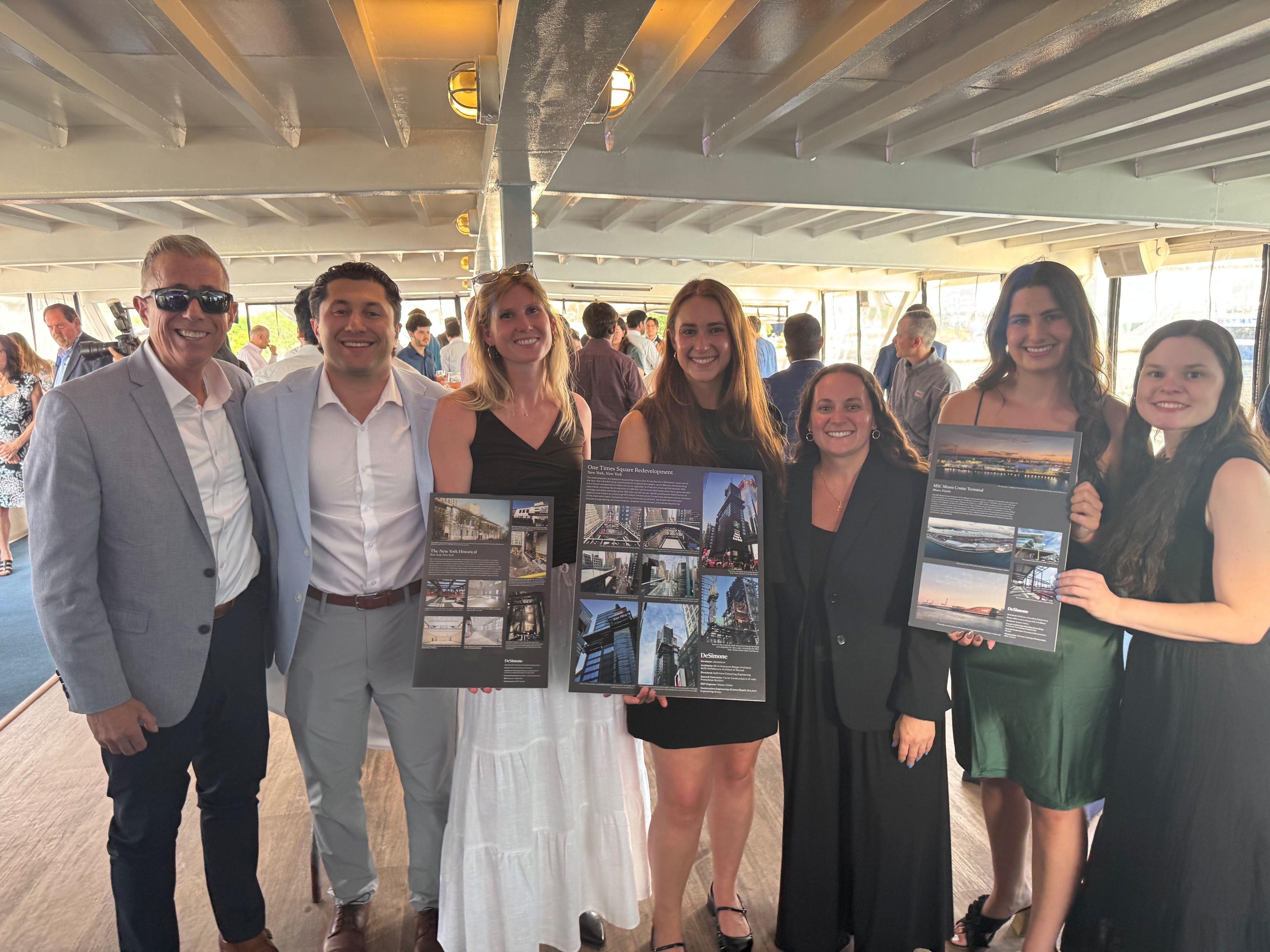
DeSimone Team: Managing Principal Mark Plechaty, PE, Senior Associate Kurt Strobel, PE, Associate Asim Khan, PE, Senior Project Engineer James Brightney, PE and Engineers Gabriella Degis and Debra Kranzlin, who accepted the award on behalf of the team.
Also pictured: DeSimone CFO/COO Tony Manuelli, Financial Analyst Tyler Rummel, Marketing Coordinator Josie Fitzgerald, Engineer Gabriella Degis, Recruiter Rachel Spaulding, and Engineers Emily Rabinowitz and Debra Kranzlin.
Photo: Xizmo Media