One Times Square Selected as SEAoNY SEE Award Finalist
The updated One Times Square was named a finalist in the SEAoNY Structural Engineering Excellence (SEE) Awards!
The redevelopment and adaptive reuse of the historic Manhattan structure, home of the famous New Year’s Eve Ball Drop, transformed a largely defunct office building into a vibrant mixed-use destination, hosting a Times Square museum, immersive experiences, a viewing platform, and more.
The complex conversion of this historic, trapezoidal 1904 building—located above active MTA transit infrastructure in one of the densest, constrained, and highly trafficked urban sites in the world—featured comprehensive structural renovation and modification.
As structural engineers for the project, we played a significant role in the transformation and adaptive reuse of One Times Square, beginning with a comprehensive reassessment of the building’s load paths and capacity in relation to global stability and localized overstress conditions.
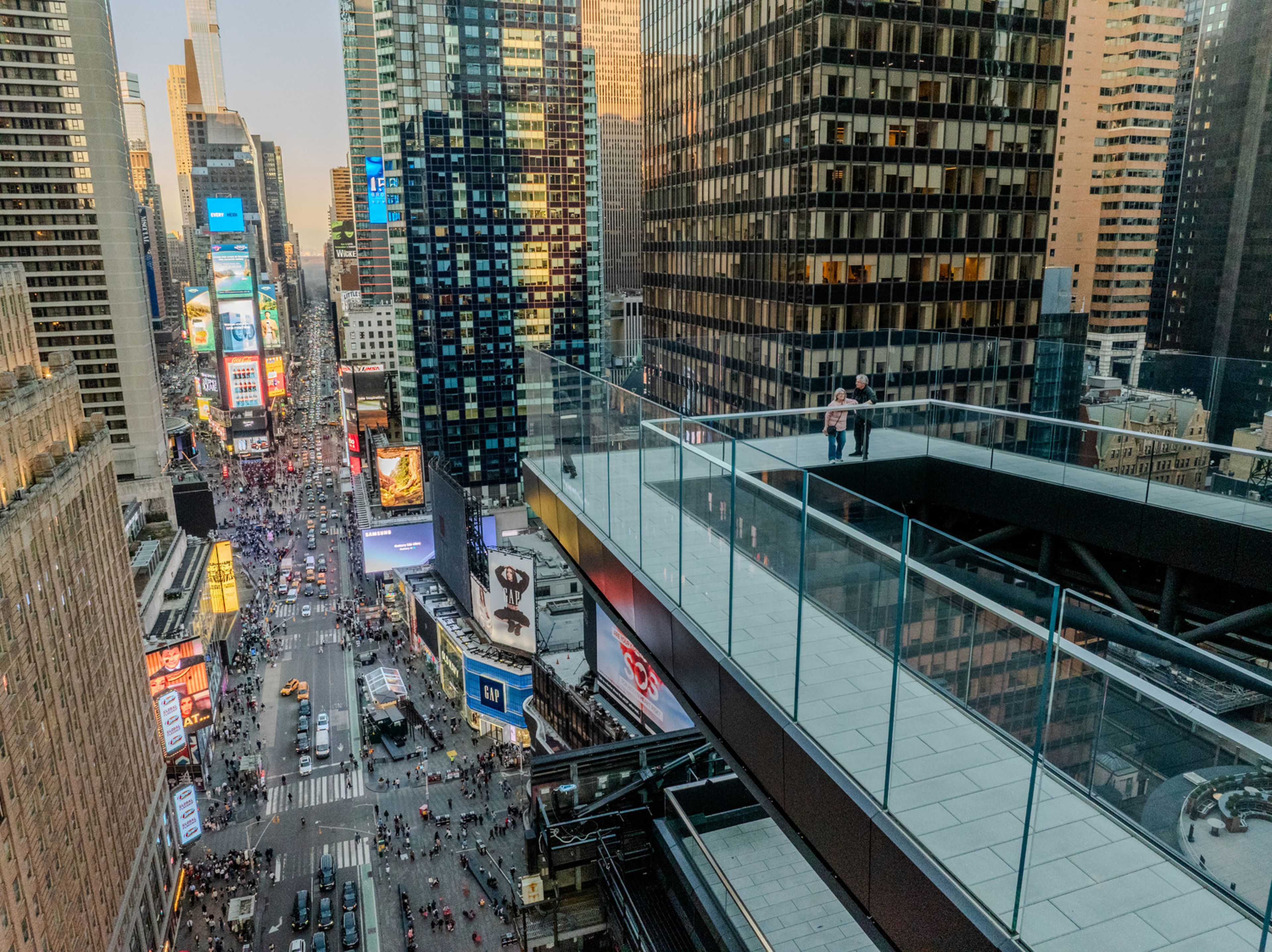
To support new gravity and lateral demands associated with new building programming, we introduced a dramatic, 55-foot, cantilevered steel viewing deck extending from the north façade at the 19th floor, cantilevered glass elevator landings and walkways extending from the façade some 19 to 20 stories above Broadway that allow visitors to look directly down to the street below, and a preserved and fortified original steel skeletal structure. Additional significant structural modifications to the existing building include a set of glass elevators that travel up the exterior.
The design of the 19th-floor observation deck cantilever represented a key engineering challenge due to substantial eccentric loading to the existing frame and high sensitivity to serviceability criteria—particularly vibrations induced by pedestrian and public event activity. Our structural design addressed these competing demands through a combination of space trusses and dynamic mitigation strategies. We encased existing framing members below the 19th floor to provide a continuous load path for the building lateral system and introduced new braced frames at the lower levels to resist increased lateral demands effected by the cantilever’s increase in building sail area.
The renovation and adaptive reuse of One Times Square demonstrates the application of advanced structural engineering techniques involving the evaluation, strengthening, and reconfiguration of an existing structure under highly constrained conditions. Through the preservation of the existing structure and foundations, integration of significant cantilevers, load redistribution strategies, vibration control systems, and targeted structural reinforcement, the project transformed an iconic but outdated building while maintaining safety, performance, and compatibility with surrounding infrastructure.
A highly collaborative, multi-service team effort, our wind engineering and vibration analysis specialists conducted simulations to determine how to ensure visitor comfort during concert events on the cantilevered deck, ultimately leading to the implementation of three Tuned Mass Dampers (TMDs). Continuous vibration monitoring has shown that the cantilevered deck remains comfortable during energetic music events.
Our steel detailers played a key role as well by helping to expedite the design, fabrication, and installation of the steel structure—reducing errors and improving accuracy. In addition, DeSimone’s Vertical Transportation team was brought on to provide elevator maintenance management consulting services on an ongoing basis.
Congratulations to the DeSimone team members who contributed so much to this exceptional project, including Managing Principal Mark Plechaty, PE, along with Senior Associate Kurt Strobel, PE, Associate Asim Khan, PE, and Senior Project Engineer James Brightney, as well as the project team.
Photo: Xizmo Media
